
Choreographer
William Forsythe
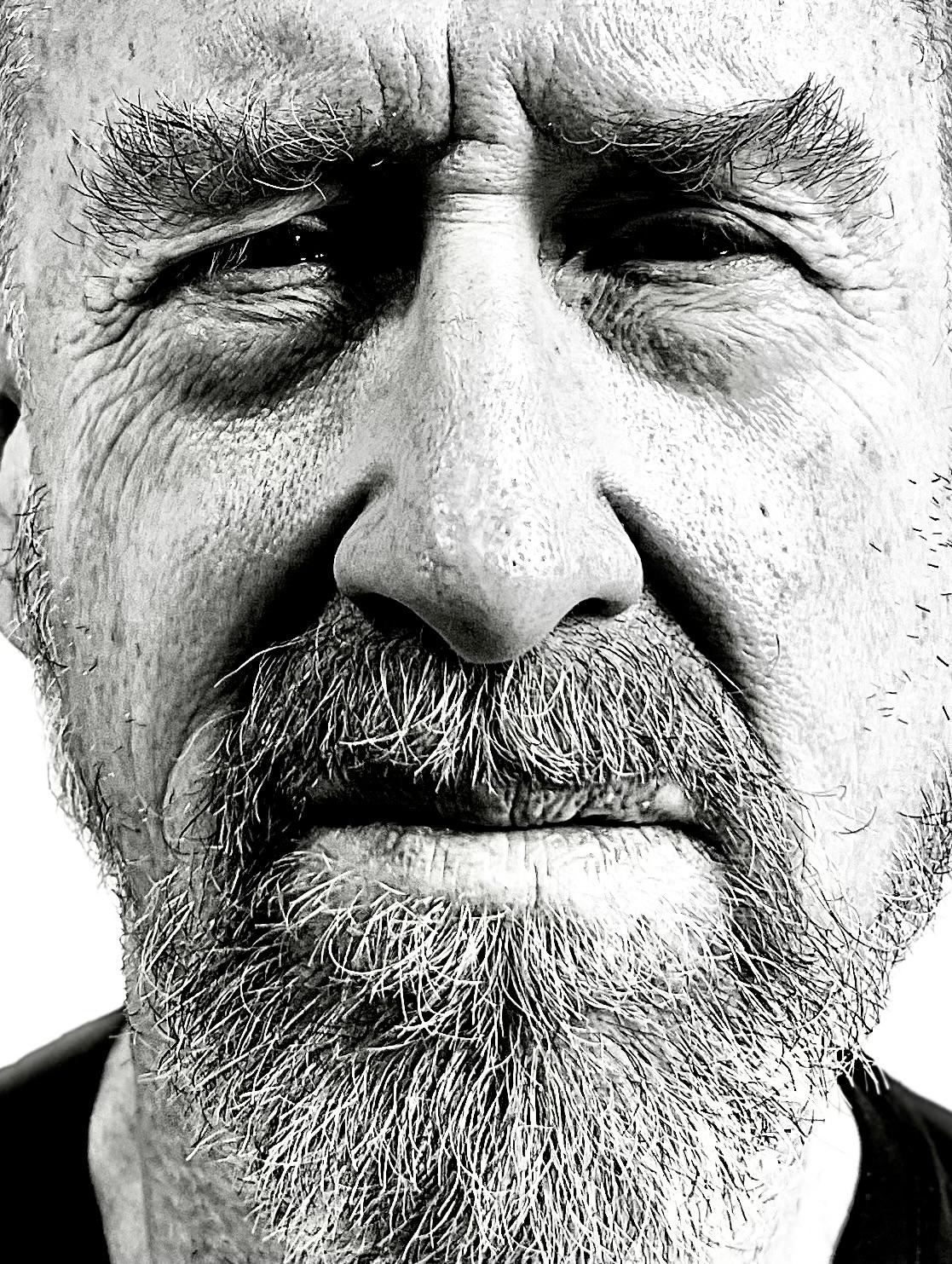
William Forsythe (*1949, New York) has been active in the field of choreography for over 50 years. His work is acknowledged for reorienting the practice of ballet from its identification with classical repertoire to a dynamic 21st century art form. Forsythe’s deep interest in the fundamental principles of organization of choreography has led him to produce a wide range of projects including installations, films, and web-based knowledge creation.
Raised in New York and initially trained in Florida with Nolan Dingman and Christa Long, Forsythe danced with the Joffrey Ballet and later the Stuttgart Ballet, where he was appointed Resident Choreographer in 1976. Over the next seven years, he created new works for the Stuttgart ensemble and ballet companies in Munich, The Hague, London, Basel, Berlin, Frankfurt am Main, Paris, New York, and San Francisco. In 1984, he began a 20-year tenure as director of the Ballet Frankfurt, where he created works such as Artifact (1984), Impressing the Czar (1988), Limb’s Theorem (1990), The Loss of Small Detail (1991), A L I E / N A(C)TION (1992), Eidos:Telos (1995), Endless House (1999), Kammer/Kammer (2000), and Decreation (2003).
After the closure of the Ballet Frankfurt in 2004, Forsythe established a new ensemble, The Forsythe Company, which he directed from 2005 to 2015. Works produced with this ensemble include Three Atmospheric Studies (2005), You made me a monster (2005), Human Writes (2005), Heterotopia (2006), The Defenders (2007), Yes we can’t (2008/2010), I don’t believe in outer space (2008) and Sider (2011). Forsythe’s works developed during this time were performed exclusively by The Forsythe Company, while his earlier pieces are prominently featured in the repertoire of virtually every major ballet company in the world, including the New York City Ballet, San Francisco Ballet, National Ballet of Canada, Staatsballett Berlin, England’s Royal Ballet and the Paris Opera Ballet.
More recently Forsythe has created original works for the Paris Opera Ballet (Blake Works I, 2016), English National Ballet (Playlist (Track 1,2, 2018); Sadler’s Wells Production (A Quiet Evening of Dance, 2018); Boston Ballet (Playlist (EP),2019; The Barre Project (Blake Works III), 2022); Dance Theatre of Harlem (The Barre Project (Blake Works IV), 2023); Ballet Company Teatro alla Scala (The Barre Project (Blake Works V), 2023) and Dresden Frankfurt Dance Company (Undertainment, 2025), as well as The Barre Project (Blake Works II) created in 2020 for the digital stage.
Awards received by Forsythe and his ensembles include the New York Dance and Performance “Bessie” Award (1988, 1998, 2004, 2007) and London’s Laurence Olivier Award (1992, 1999, 2009). Forsythe has been conveyed the title of Commandeur des Arts et Lettres (1999) by the government of France and has received the Hessischer Kulturpreis/ Hessian Culture Award (1995), the German Federal Cross of Merit (First Class) (1997), the Wexner Prize (2002) the Golden Lion of the Venice Biennale (2010), the Samuel H Scripps / American Dance Festival Award for Lifetime Achievement (2012) and the German Theater Award FAUST for Lifetime Achievement (2020). In November 2024, he was awarded the Kyoto Prize.
Forsythe has been commissioned to produce architectural and performance installations by architect-artist Daniel Libeskind (Groningen, 1989), ARTANGEL (London,1997), Creative Time (New York, 2005), and the SKD – Staatliche Kunstsammlungen Dresden (2013, 2014). These Choreographic Objects, as Forsythe calls his installations, include among others White Bouncy Castle (1997), City of Abstracts (2000), Nowhere and Everywhere at the Same Time No. 2 (2013), Black Flags (2014), Underall (2017) and The Sense of Things (2021). His installation and film works have been presented in numerous museums and exhibitions, including the Whitney-Biennale (New York, 1997), Louvre Museum (2006), 21_21 Design Sight (Tokyo, 2007), Pinakothek der Moderne (München, 2006, 2023), Wexner Center for the Arts (Columbus, 2009), Tate Modern (London, 2009), MoMA (New York, 2010), Biennale Venedig (2005, 2009, 2012, 2014), MMK – Museum für Moderne Kunst (Frankfurt, 2015), 20th Biennale of Sydney (2016), ICA Boston (2011, 2018), Sesc Pompeia (Sao Paulo, 2019), Museum Folkwang (2019), Museum of Fine Arts, Houston (2020), Kunsthaus Zürich (2021), and ZKM | Karlsruhe (2023, 2024,2025).
In collaboration with media specialists and educators, Forsythe has developed new approaches to dance documentation, research, and education. Core elements of his CD-ROM Improvisation Technologies: A Tool for the Analytical Dance Eye, developed with the ZKM | Center for Art and Media Karlsruhe and first published in 1999, are now accessible online. 2009 marked the launch of Synchronous Objects for One Flat Thing, reproduced, a digital online score developed with The Ohio State University that reveals the organizational principles of the choreography and demonstrates their possible application within other disciplines. Synchronous Objects was the pilot project for Forsythe's Motion Bank, a research platform focused on the creation and research of online digital scores in collaboration with guest choreographers.
In 2002, Forsythe was chosen as the founding Dance Mentor for The Rolex Mentor and Protégé Arts Initiative. Forsythe is an Honorary Fellow at the Laban Centre for Movement and Dance in London and holds an Honorary Doctorate from The Juilliard School in New York.
Repertory

Support Ailey
Every donation to AILEY, a non-profit organization, furthers the pioneering vision of our founder, Alvin Ailey, to deliver dance back to the people.
Hero Credit: Photo by Julian Gabriel Richter